How to Photograph a 4 Month Old Baby
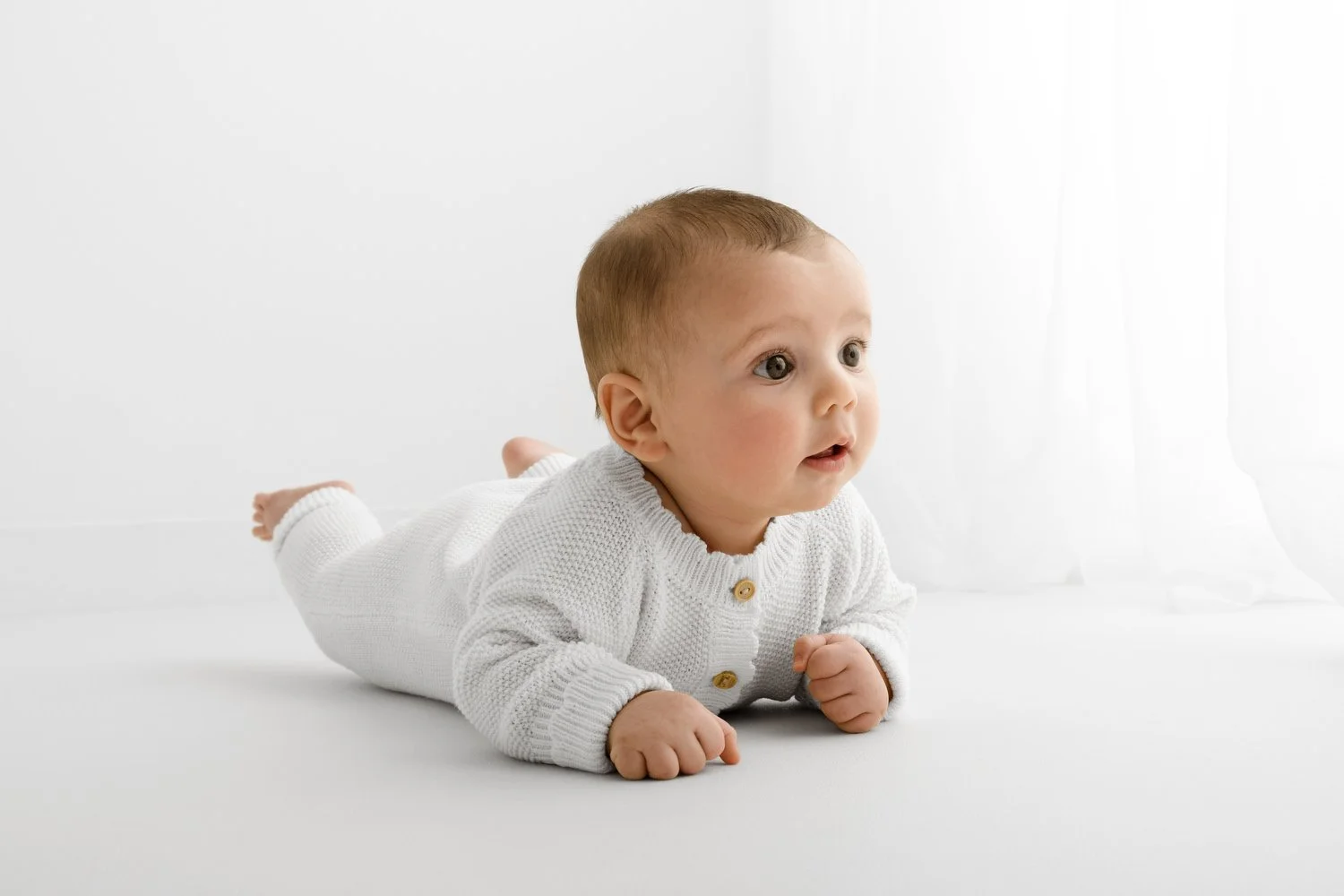
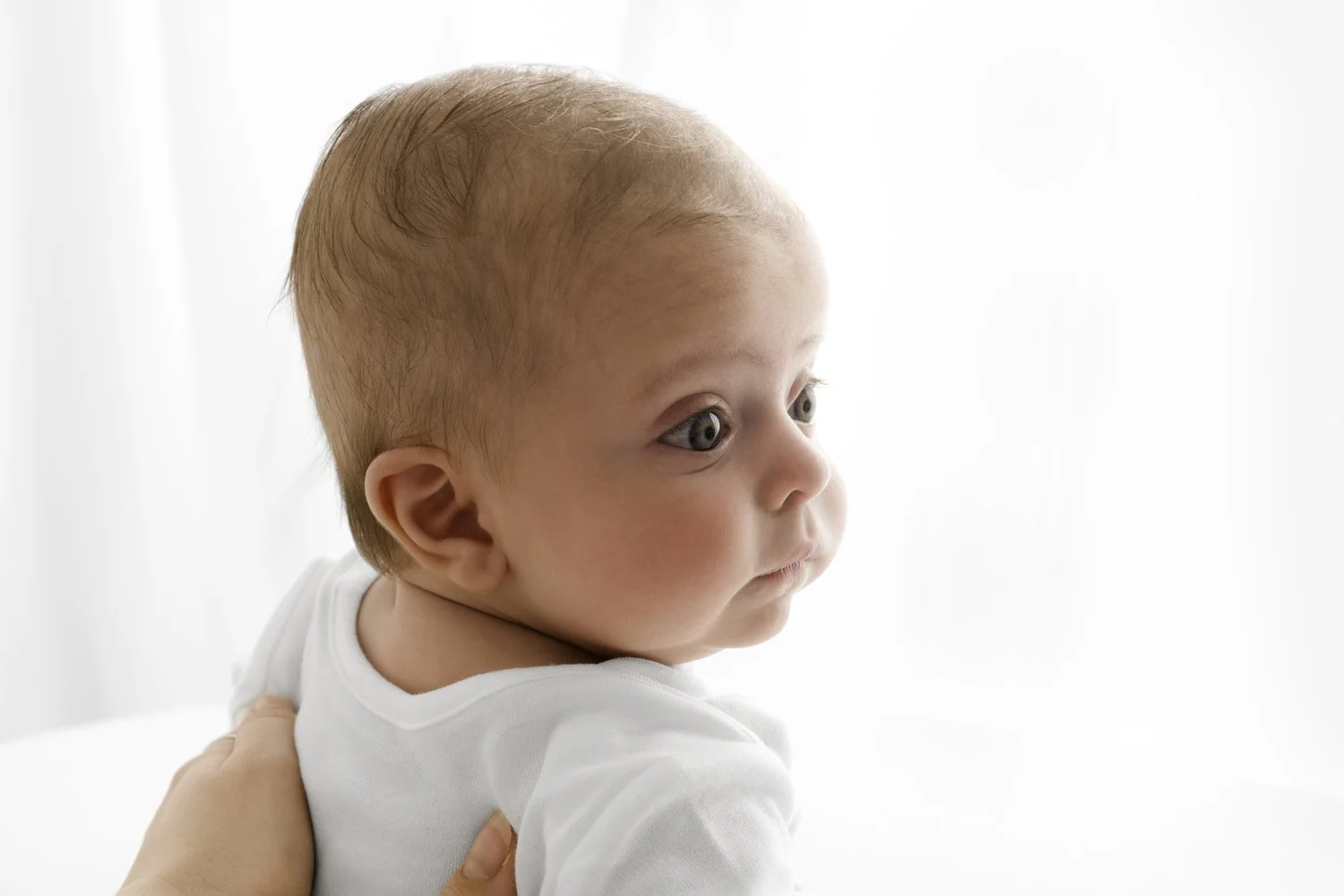
By four months your baby client is becoming a real little character. They are stronger, more expressive and increasingly aware of everything going on around them. The smiles are bigger, the eye contact is more sustained and the personality that was just beginning to emerge at three months is now very much present.
This is a rewarding age to photograph but it requires the same quick thinking and preparation as three months. Baby still cannot sit unaided, still tires relatively quickly and still needs a calm structured approach to get the best results.
If you have read my post on photographing a 3 month old baby the foundations are the same. Everything in this post builds on those principles. If you have not read my post on photographing a 3 month old baby I would start there as it covers all the foundations. You can also read about photographing a 5 month old baby in the next post in this series.
The key difference at four months is that baby is stronger and that opens up one additional position that works beautifully at this age.
Everything from 3 Months Still Applies
Assess the baby the moment they arrive. Check the feeding schedule. Use dad first before mum. Use your screen not your viewfinder. Get close. Use a jingle bell softly. Aim for 10 images. Get parents in early. Never leave a rolling baby unattended. Always get a sleepy shot at the end.
All of that applies at four months exactly as it does at three. If you have not read my 3 month post I would start there as it covers all of these points in detail. This post focuses on what changes and what becomes possible at four months.
The Tummy Time Position
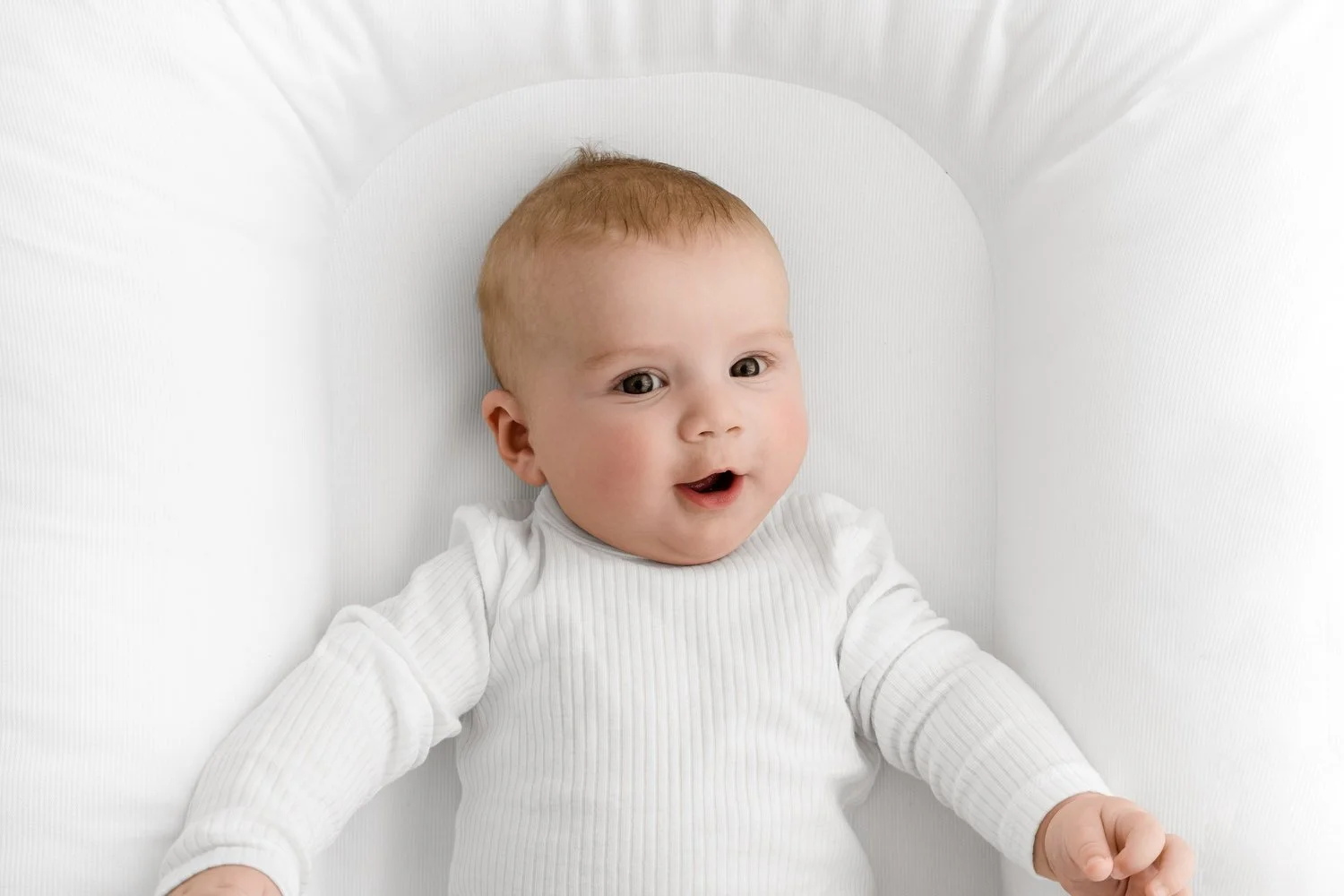
By four months many babies have been practising tummy time regularly and have built up enough strength to push themselves up onto their forearms and lift their head. When this works it gives you one of the most charming and characterful images of the entire session. That little face looking straight up at you with those chubby arms planted firmly underneath them is irresistible.
This position works on the beanbag but I often find the floor gives a better result at this age. The firm flat surface makes it easier for the baby to push up and hold the position comfortably.
The most important thing to know about tummy time during a session is not to keep the baby in this position for too long. It takes real effort for a baby to hold themselves up and they tire quickly. A tired baby in tummy time becomes a flat baby, and then an unsettled baby for the rest of the session. Get your shots quickly and efficiently, move the baby on before they start to struggle and you will have a beautiful image without compromising the rest of the session.
Use this position when the baby is fresh and alert, not when they are already showing signs of tiring. And as always, never step away while a baby is in tummy time on any surface.
The Propped Cushion Position
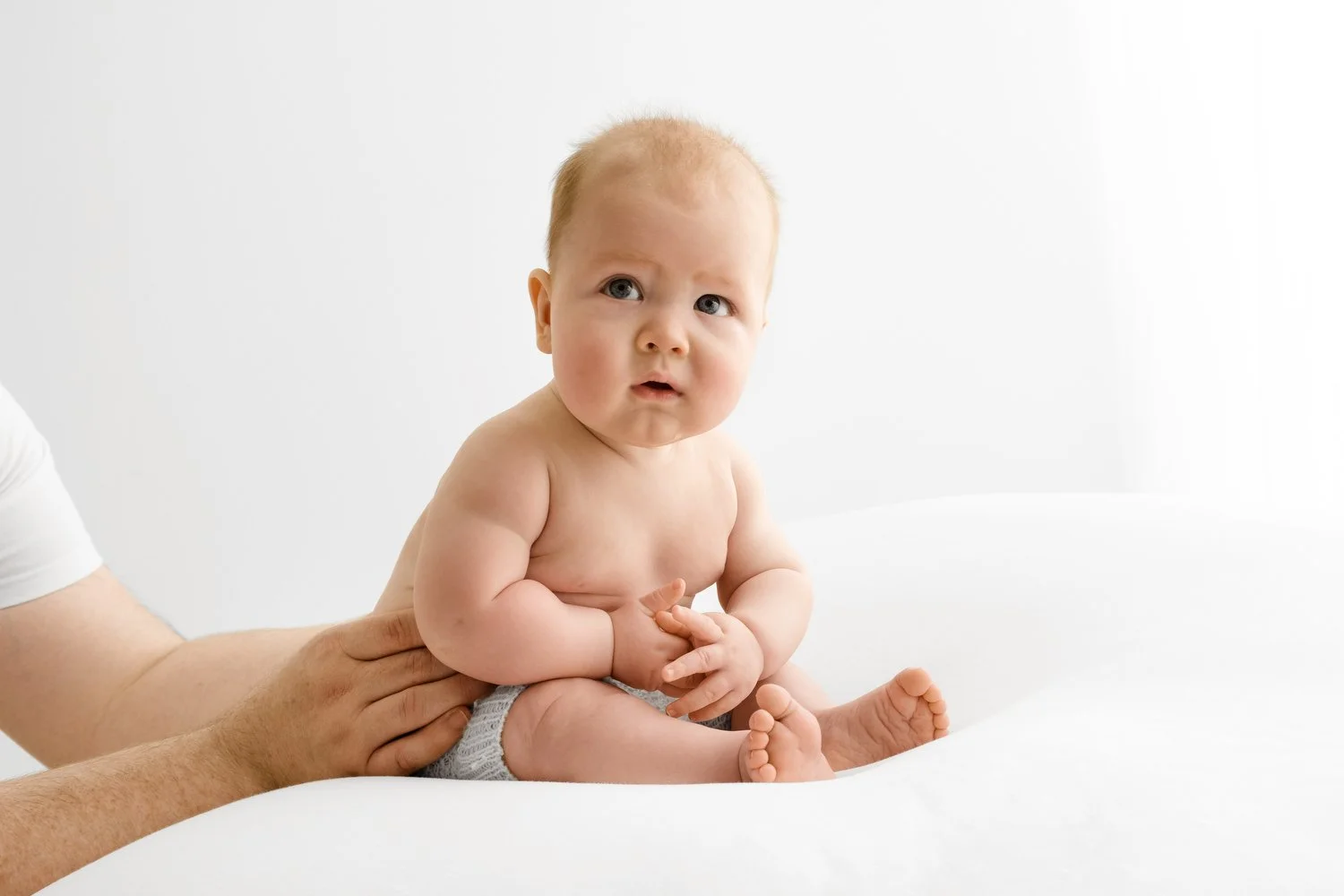
At four months the propped cushion position is becoming more achievable than it was at three months. Baby is stronger and better able to hold themselves with a little support behind them. It is still worth being honest with yourself about whether it is working. If it is taking too long or the baby keeps slumping, move on. A beautiful image of baby lying on the beanbag or being held by a parent will always be chosen over a forced sitting portrait.
That said, at four months it is worth giving it a genuine attempt before you decide to move on. You may be pleasantly surprised.
Held Sitting Portraits
Ask a parent to hold their baby in a sitting position supported in their hands or against their chest. At four months baby has enough neck and core strength to hold their head up well in this position and the portraits you get are full of personality and connection.
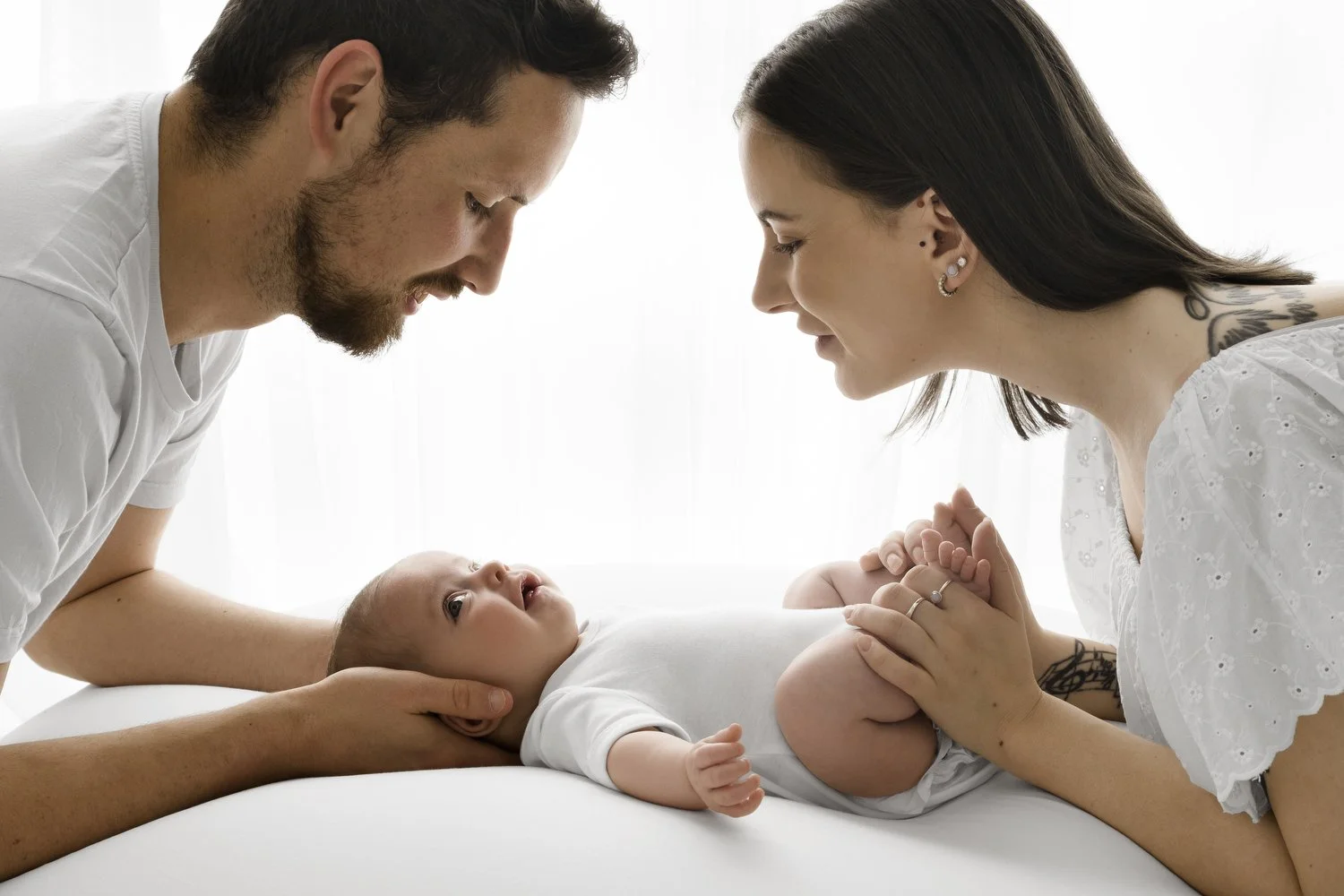
These images also work beautifully for family portraits. Ask both parents to lean in over the baby while one of them holds them sitting and you will get a natural loving image where everyone is looking at the baby rather than the camera. That is always the most powerful kind of family portrait.
Keep Moving and Keep Watching
Four month old babies can move quickly and unpredictably. They may not be fully rolling yet but they are experimenting with movement constantly. Keep yourself positioned close to the beanbag at all times and ask dad to stay nearby whenever you need to adjust anything.
Watch the baby constantly for signs of tiring. Yawns, stretches, fussiness and loss of eye contact all tell you the session is nearing its natural end. Use that time well. Hand the baby back to the parents, talk through your products and what happens next and let the baby rest. If they drift off you know what to do. Get that sleepy shot. It will complete the gallery.
If you would like to go deeper, my One-to-One Mentoring is built entirely around what you need, whether that's newborns, older babies, or everything in between, alongside the session structure and selling skills that turn a beautiful gallery into a profitable business.
If you'd rather start somewhere simpler, The Simple Six Beginners Course is a structured online course you can work through at your own pace.
Start The Simple Six Beginners Course
And the Flow Posing Guides give you ready made session flows so as every session feels relaxed.