My 5 Rules for Natural Newborn Photography
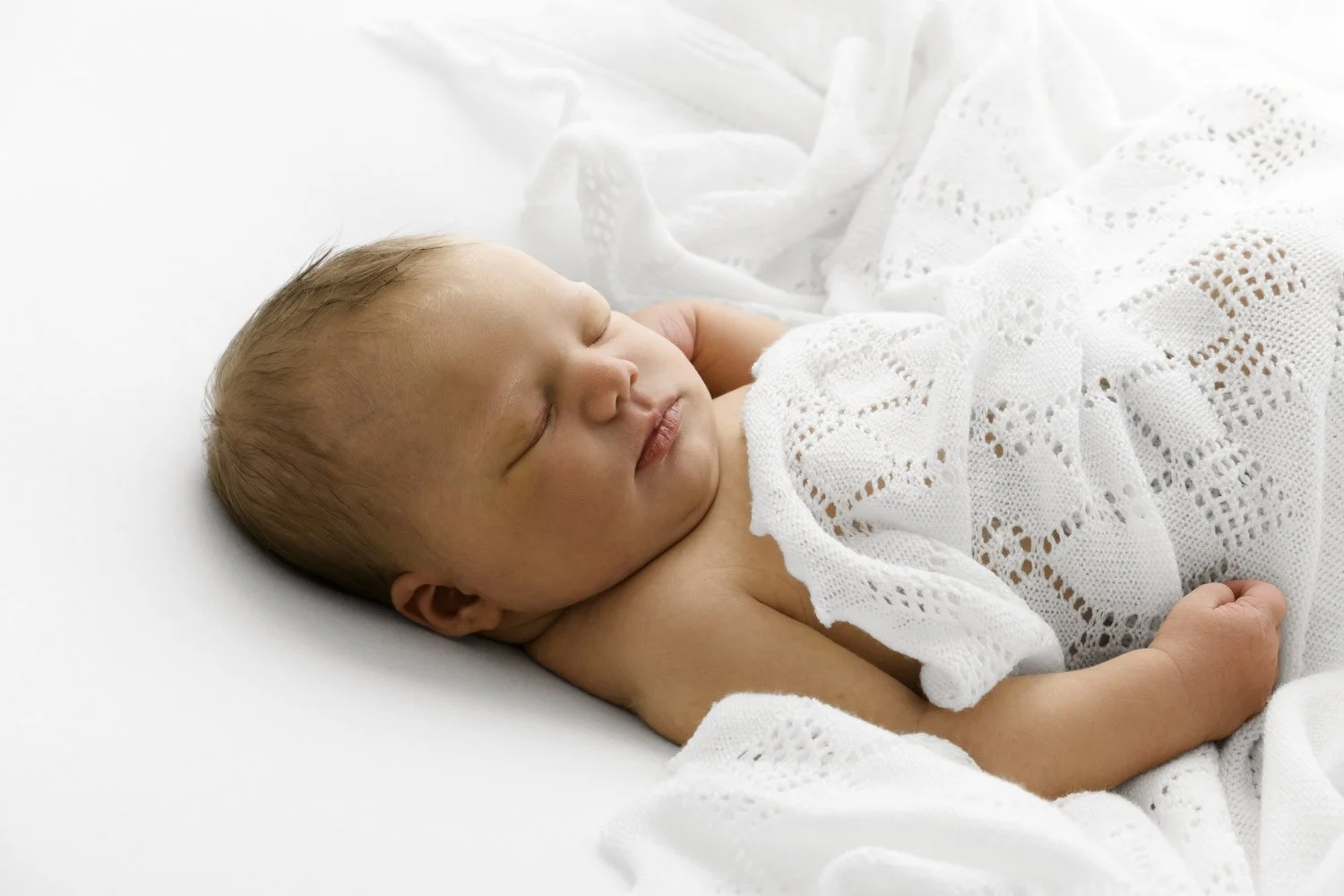
Over the years I have developed 5 personal rules that guide every newborn session I shoot and every image I deliver. They are not complicated rules. But they matter enormously to me and they shape everything about the way I work.
I am sharing them here because I think they are worth thinking about as you develop your own approach to newborn photography. They apply whether you shoot in my minimal Scandi style or in a completely different aesthetic. Natural lifestyle newborn photography is not about colour palettes. It is about making sure every image you create looks like a real baby, held by real parents, in a real moment.
Rule 1: Baby Must Look Alive
This sounds dramatic. Bear with me.
There is a style of newborn editing that drains all the colour from a baby's skin in an attempt to remove the natural redness and blotchiness that many newborns have. The result is a very pale, very still, very perfectly presented baby that looks, if I am being honest, a little unsettling.
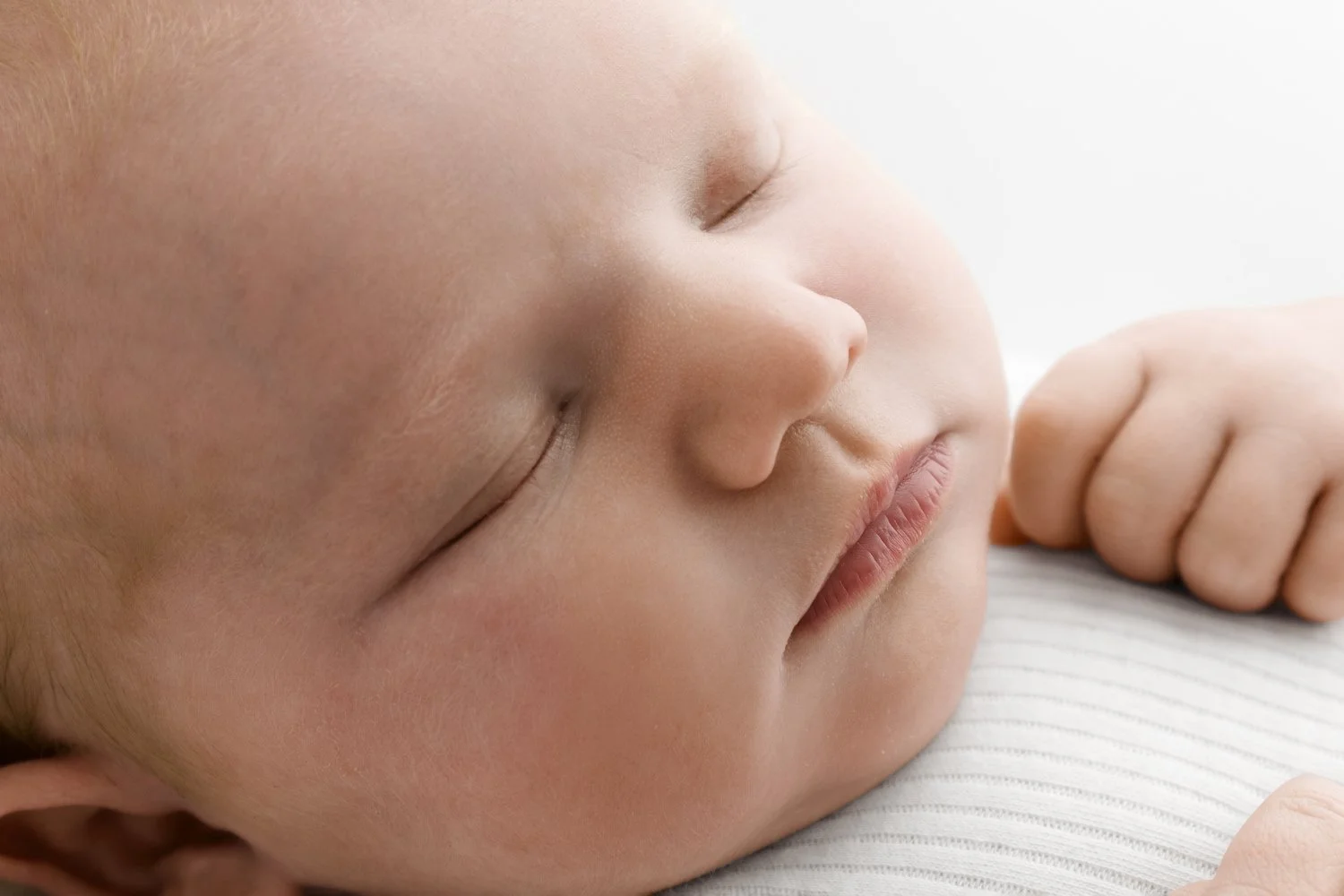
I want warm rosy cheeks. I want colour in those beautiful little lips. I want the baby to look like they are breathing, dreaming, living. A newborn's skin is extraordinary and yes it can be a little uneven and a little red in places. That is because they have just arrived in the world. That is what brand new looks like.
You can even skin tone gently. You can reduce redness without eliminating it entirely. What you should never do is remove all the warmth from a baby's face in pursuit of a look that ends up being more unsettling than beautiful.
Editing is only part of it though. Posing plays a role too. Lying a baby on their back with their tiny hands placed perfectly still on their chest can sometimes have exactly the wrong effect. So take a look at how your sleeping baby is posed before you press the shutter. It does not need to be so very perfect. Move a little finger slightly. Wait for a tiny expression to cross their face in their sleep, that fleeting little almost smile that newborns do.
If you want to read more about working with a settled baby during a session you might find my guide to how to settle a newborn during a photoshoot useful.
It is the combination of these two things together, the overly posed stillness and the drained editing, that creates an image with an uncomfortable feel to it. On its own each one might be subtle. Together they become hard to ignore. And once you have seen it you cannot unsee it.
Rule 2: Baby Must Not Look Like They Have Been Dropped From a Great Height
My very first newborn session I almost certainly broke this rule. I was so focused on the technical side of things that I essentially placed the baby down and photographed whatever happened. What happened was a perfectly healthy baby lying with their arms and legs splayed out in every direction looking somewhat startled.
A stretching baby is adorable. A splayed baby is not quite the same thing.
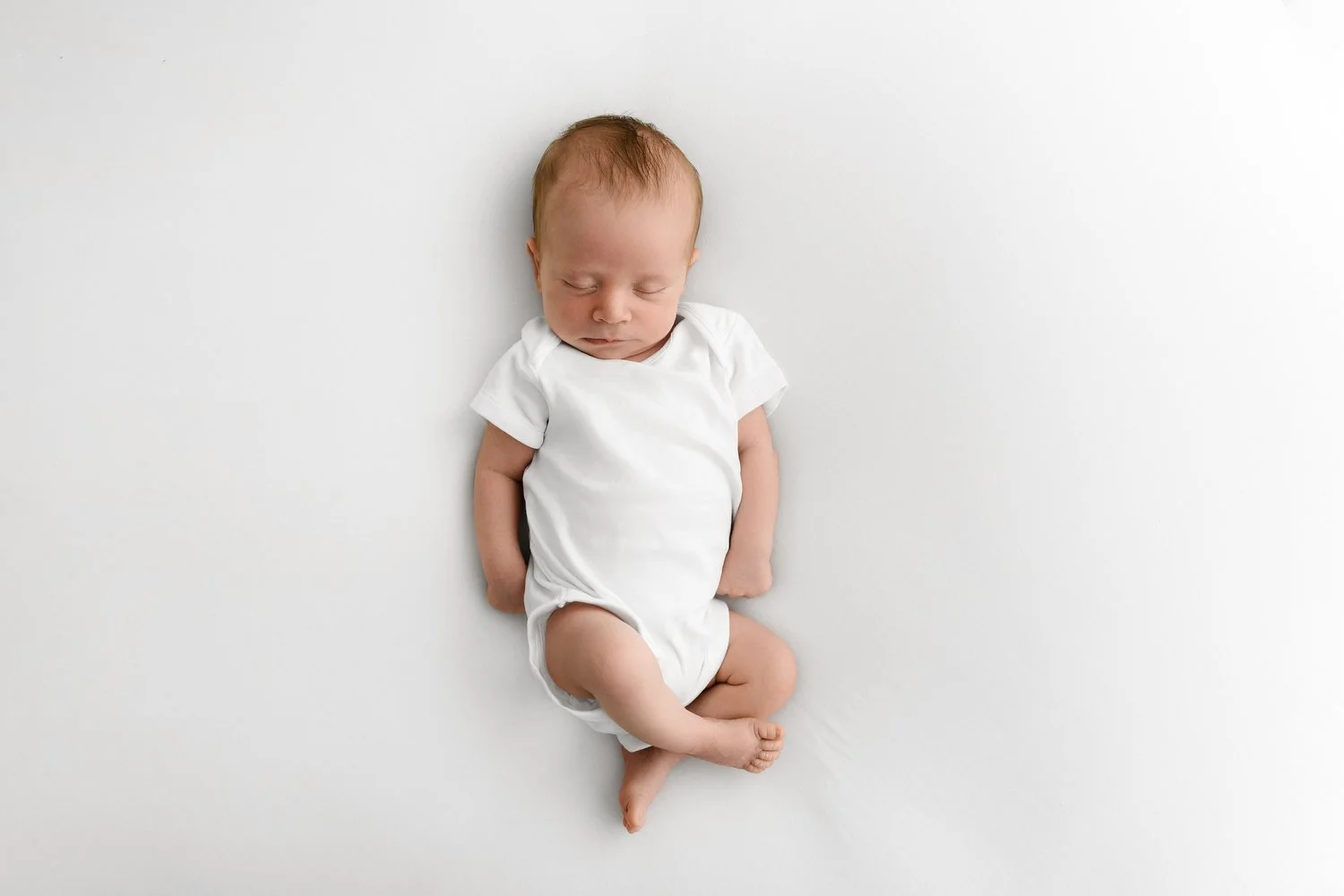
Newborns are naturally curly. They spent nine months curled up and they are most comfortable and most beautiful when they are gently encouraged back into that position. You do not need to force anything. A carefully placed posing aid, even something as simple as a rolled up terry nappy tucked under your blanket layers on the beanbag, can make all the difference. A little gentle encouragement toward a slightly curled position looks completely natural and makes for a much more beautiful image.
Rule 3: Baby Must Not Look Like a Plastic Doll
This one is about editing and it is something I feel strongly about.
Over editing a baby's skin removes everything that makes them individual. Those tiny milk spots are adorable. That little patch of dry skin on their forehead is part of who they are right now. The slightly uneven skin tone that is completely normal for a newborn is not something to eliminate, it is something to preserve.
Every baby has a different skin tone and that difference should be visible in the photographs. A baby does not have the same skin tone as their parents and they should not be edited to look like they do. You can even and soften but you should never flatten.
I will gently remove a particularly prominent spot or blemish that I know will distract. I will never remove a birthmark. A birthmark is part of that baby's identity and it will be part of their story for the rest of their life. It belongs in the photographs.
Rule 4: Nobody Should Look Like They Are Winning a Tug of War
You have seen this image. Mum holds the baby's head. Dad holds the baby's feet. There is nothing underneath supporting the baby. Everyone is looking at the camera and smiling. The baby is stretched between them like a tiny human wishbone.
Nobody holds a baby like this in real life.
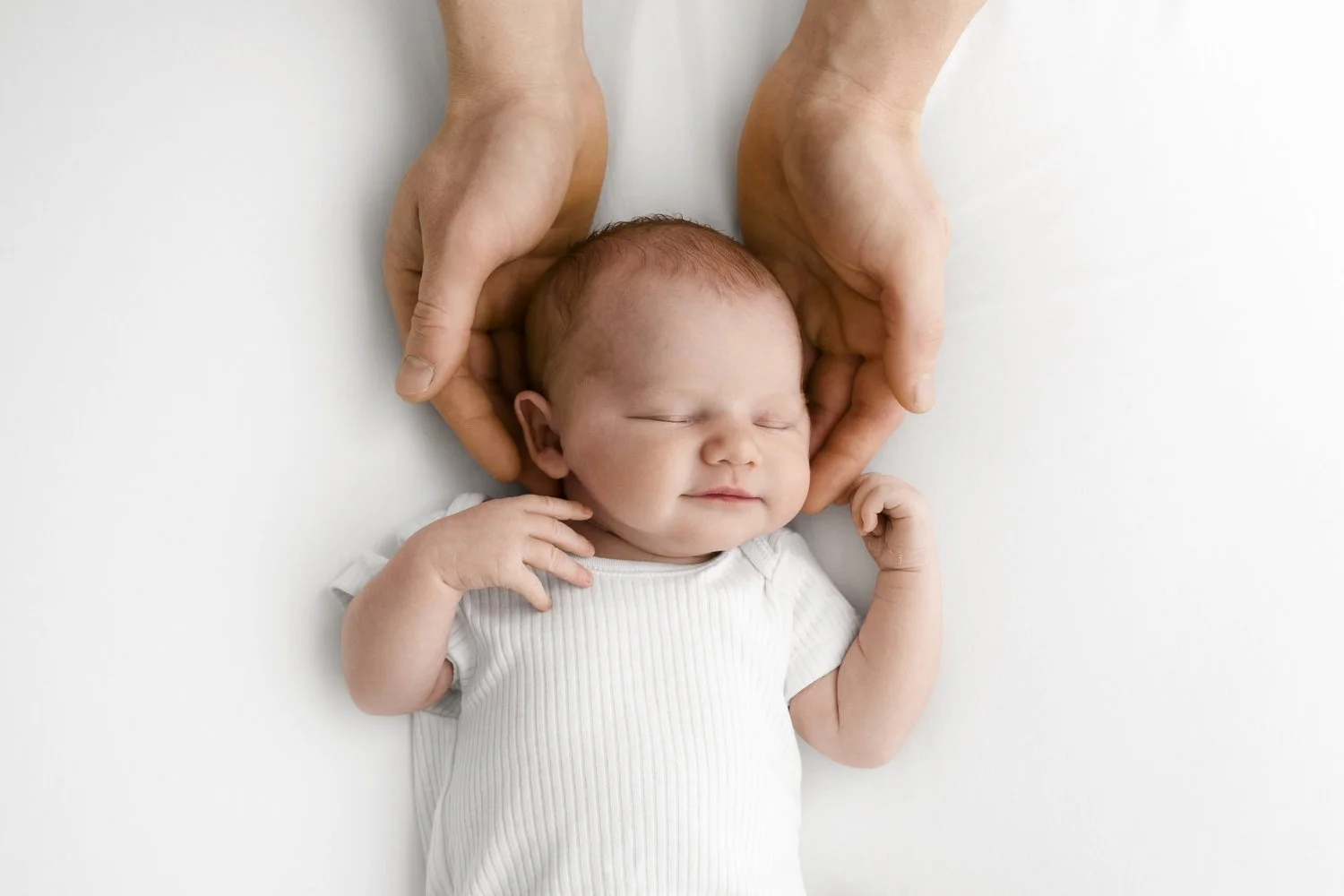
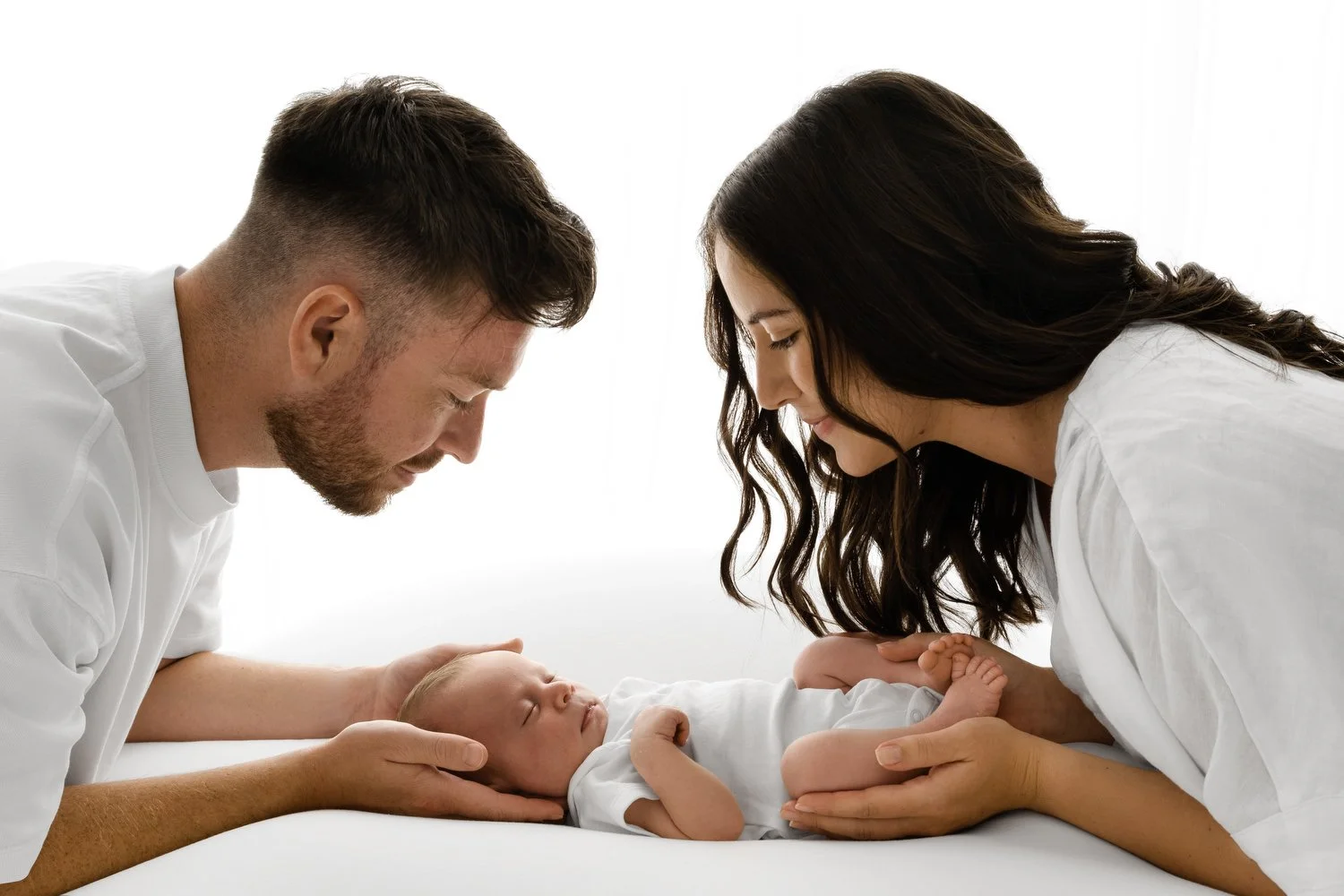
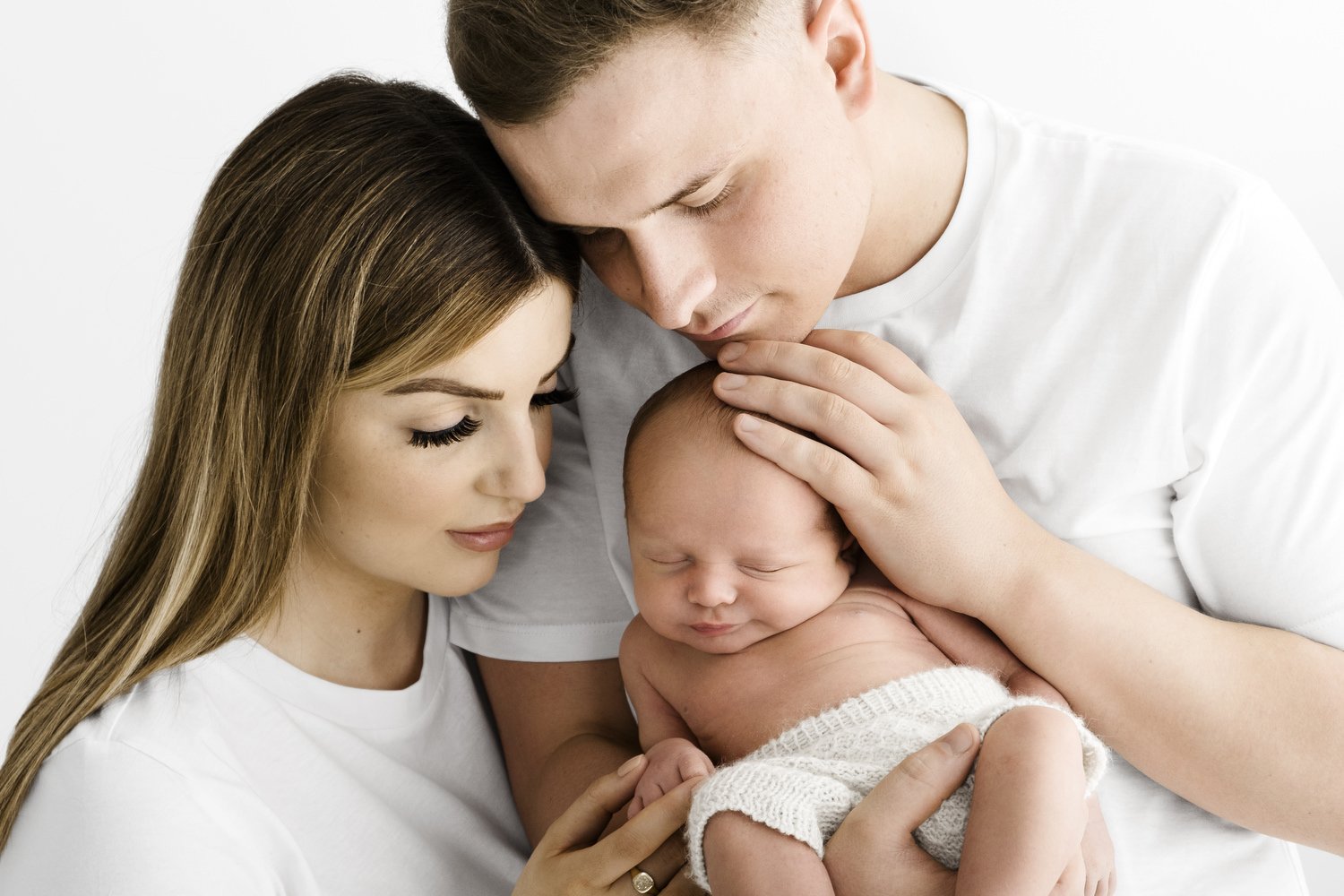
There are beautiful ways to include both parents in a photograph with their baby that look completely natural and loving. Both parents leaning in together over their baby who is resting on the beanbag. One parent holding the baby while the other rests a hand gently on them. Parents sitting either side of their newborn looking down at them together. All of these create images where you can see both parents and the baby and every single person looks like they are exactly where they want to be.
When parents look at these images in ten years they will feel the love in them. That is what you are aiming for.
Rule 5: One Traditional Shot Is Enough
Every session I do includes one photograph where both parents look directly at the camera with their baby. Just one. It is a more traditional style of portrait and it has its place. Grandparents love it. It is the one that gets framed for the mantelpiece at Great Gran's house.
But here is the honest truth. It will almost certainly be the parents' least favourite image in the gallery. Because the photographs that make people catch their breath are always the ones where everyone is looking at the baby. Where you can see the love passing between them. Where nobody is performing for the camera because nobody is thinking about the camera at all.
Those are the images that sell. Those are the images that get framed and hung on walls and passed down through families. Shoot for those and let the one traditional shot be exactly that. Just the one.
These are my rules. They might not all be yours and that is absolutely fine. But I hope they give you something to think about as you develop your own approach to natural lifestyle newborn photography.
If you would like to learn more about how I apply these principles in every session I shoot, my Flow Posing Guides are built around exactly this philosophy.