Newborn Detail Photography: What Actually Sells and Why
The Detail Shots Photographers Love and Parents Don't Always Buy
There is a particular kind of newborn detail photograph that photographers absolutely love. An extreme close up of a single tiny toe. A pair of lips so tightly cropped you can see every perfect line. An ear, every delicate hair visible, lit beautifully against soft white. They are technically impressive, carefully composed and endlessly shared in photography communities online.
And quite often, parents do not buy them.
I say this not to dismiss macro detail photography, because at its best it is genuinely stunning and I adore it myself. I say it because after years of photographing newborns and watching parents respond to their images at Reveal Sessions, I have noticed a very clear pattern. Understanding that pattern changed the way I approach detail shots completely, and I think it will change yours too.
The Detail Shots That Sell Consistently
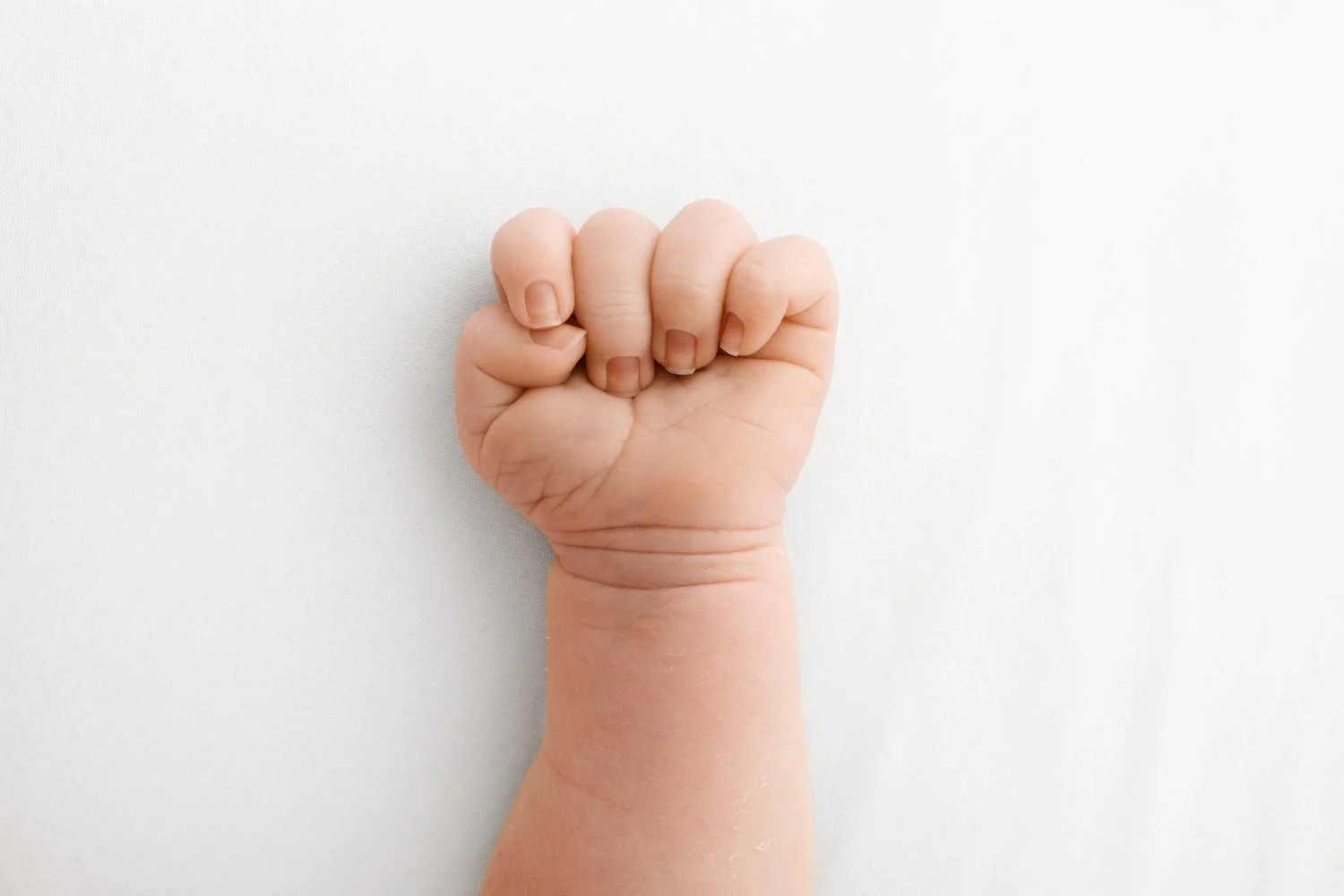
Let me start with this image. A newborn fist on a clean white background. No parent's hand for scale, no surrounding context. By the logic I am about to share it should be one of the hardest detail shots to sell. And yet parents do choose it, occasionally, and when they do it is almost always for a deeply personal reason.
A mum whose baby spent the whole pregnancy throwing their little fists around inside her. A parent who could always see their baby holding their hand just like this in every scan photograph. A family for whom this particular gesture meant something specific that I as the photographer could never have predicted.
This is why I always include images like this in a gallery and never dismiss them. You cannot know what will resonate and you should never assume. But it is worth being honest about when and how these images tend to be chosen, because it will help you understand the rest of what I want to share.
In a larger collection, or in a multi image frame where 9 photographs tell the whole story of a session, a detail like this fits beautifully. It adds texture and variety to the collection as a whole. But if a parent is choosing a collection of 10 images and has to make careful decisions, this is rarely where their budget goes. There is almost always another image they love more.

The Beautiful Shots That Lose Out When Budgets Are Tight
Now look at this image. Newborn feet tucked into a white shawl, both feet visible, the texture of the knit giving context and warmth. This is still very much a detail shot. It is close, it is intimate, it focuses entirely on those tiny perfect toes. But it sells consistently and confidently.
The reason is simple. Parents can see enough to know it is their baby. The feet are not floating in isolation. They belong to someone. There is a sense of the whole baby even though we are only seeing a small part of them. That connection, that recognisability, is what transforms a beautiful abstract into an image a parent needs to have.
The most common response I hear to an extreme close up of a single toe is that it could be any baby's toe. And they are right. Without context, the emotional connection is weakened. Pull back even slightly, show the feet together, wrap them in something soft, and suddenly that response disappears completely.
Why Wider Detail Shots Work Better and What Kit You Actually Need
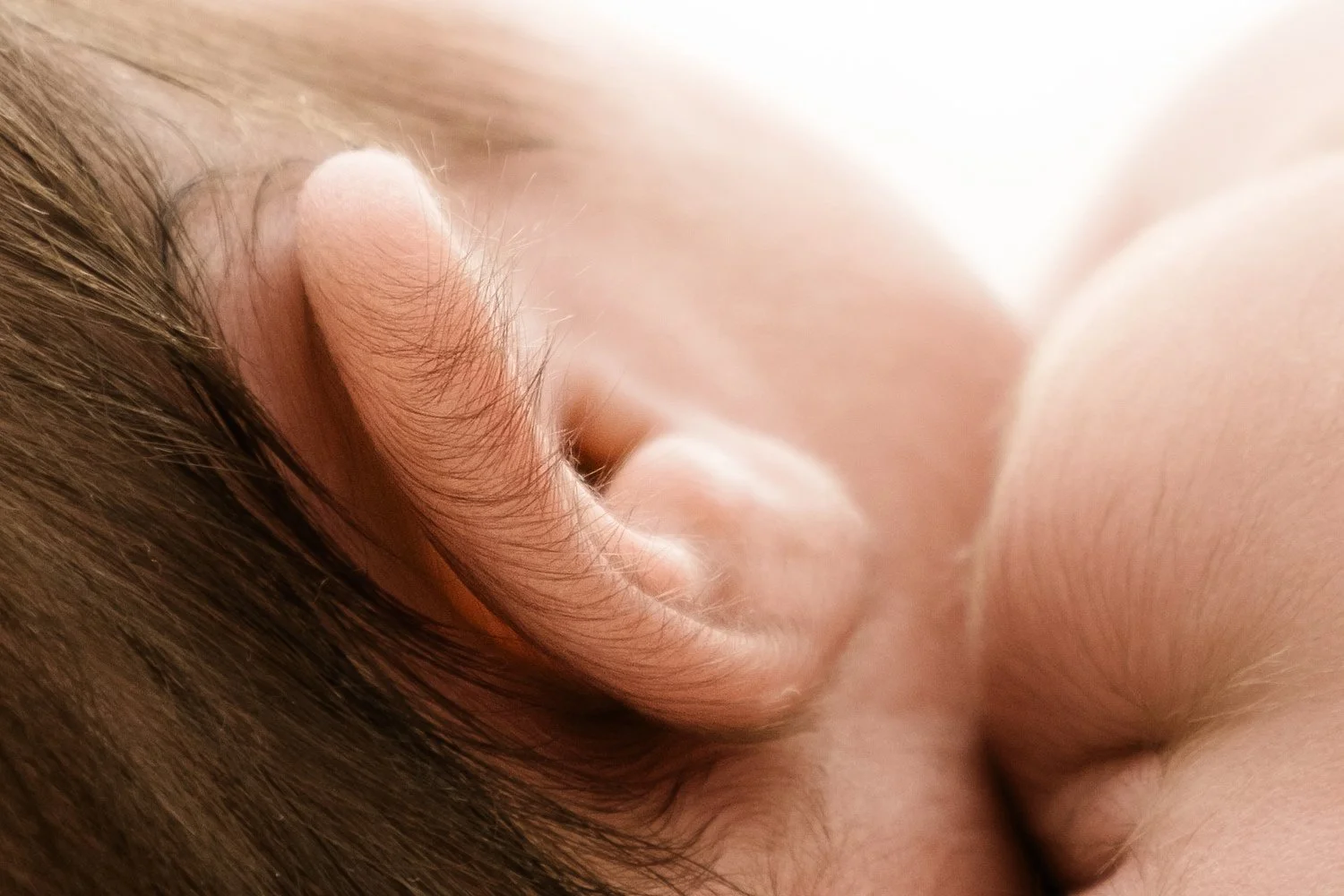
This is one of my favourite images to take. A newborn ear, every tiny hair and every detail of that perfect little shell visible. It is genuinely beautiful and I love it.
But I have to be honest with you. When parents are making budgeting decisions at their Reveal Session, this image loses out. The response is warm, always, but it is the same response as the single toe. It could be any ear. Without seeing enough of the baby's face or head alongside it, the personal connection is not strong enough to win when there are other images competing for that same space in a collection.
In a larger collection it earns its place. In a multi image frame it adds beautifully to the story of the session. But if a parent is choosing carefully and something has to go, this is often what goes.
Knowing this does not mean you should stop shooting it. It means you should shoot it and then make sure you also have the wider version, the one that shows the ear alongside enough of the baby's face that a parent looks at it and sees their child.
The Most Powerful Detail Shot of All
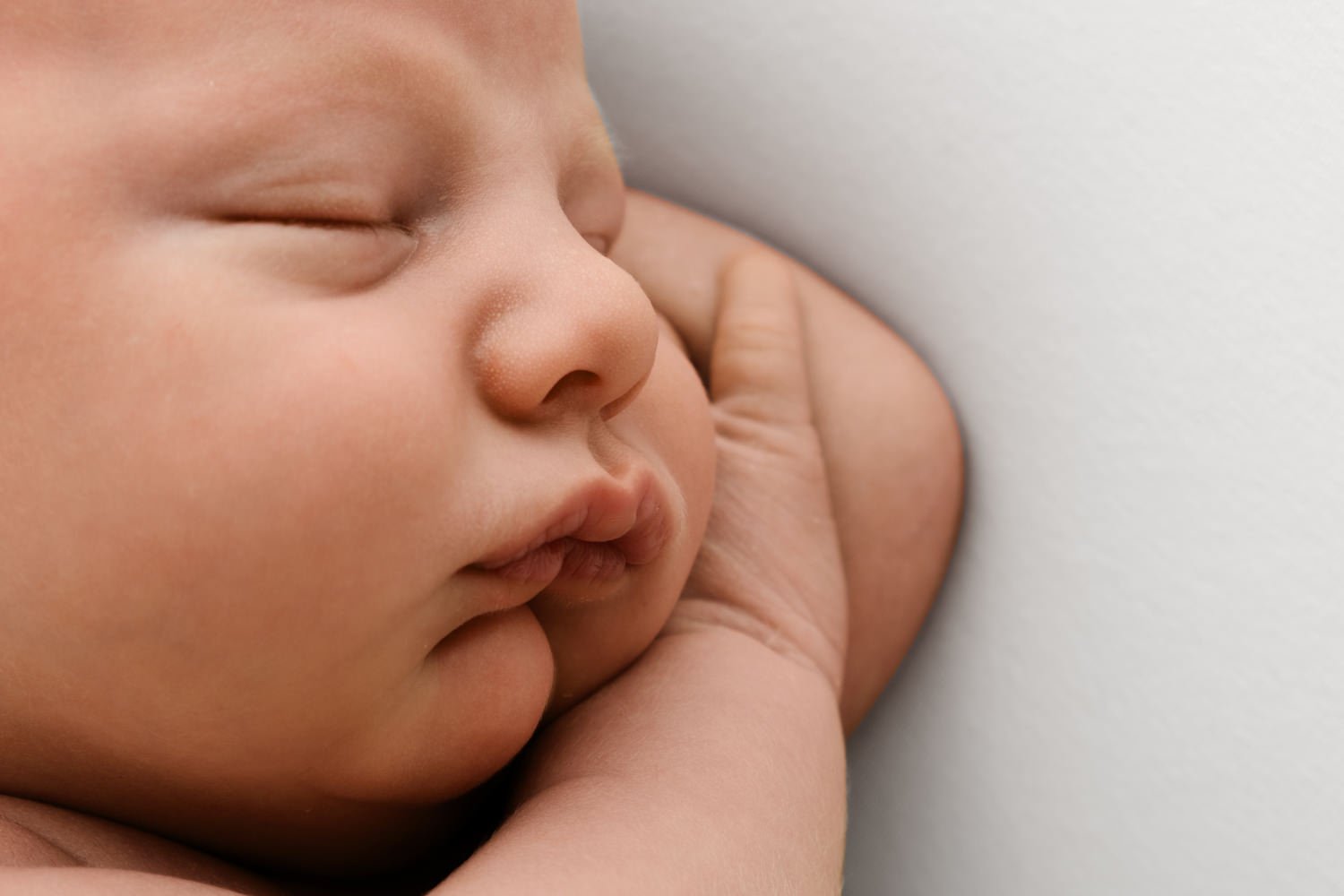
This is what I mean by wider. This is still a detail shot. The focus is on the lips, the nose, the softness of the cheek. But you can see the baby's face. You can see the chin, the curve of the cheek, the milk spots on the nose. A parent looking at this image knows without question that it is their baby.
That is the difference. Not the focal length, not the aperture, not the lens. The difference is whether a parent can see enough of their baby to feel that immediate, visceral recognition. When they do, the image sells. When they do not, it is admired and passed over.
I shoot all of my detail images on a Fujifilm X-T3 with an 18-55mm zoom lens at f6.4. No macro lens, no specialist equipment, no lens changes mid session. The same lens I use for everything else gives me every detail shot I need. The wider approach also makes focus much more forgiving on a moving, breathing newborn. Macro lenses require extremely precise focus at very close distances. Miss it by a millimetre on a tiny baby and the image is gone. With a zoom at a slightly wider distance you have more room and you can work more quickly without disrupting the baby.
You can achieve exactly the same results with any camera brand and a short zoom or prime lens. I prefer a zoom for the flexibility but the principle is the same whatever kit you shoot with.
The Detail Shot That Is Also a Family Portrait
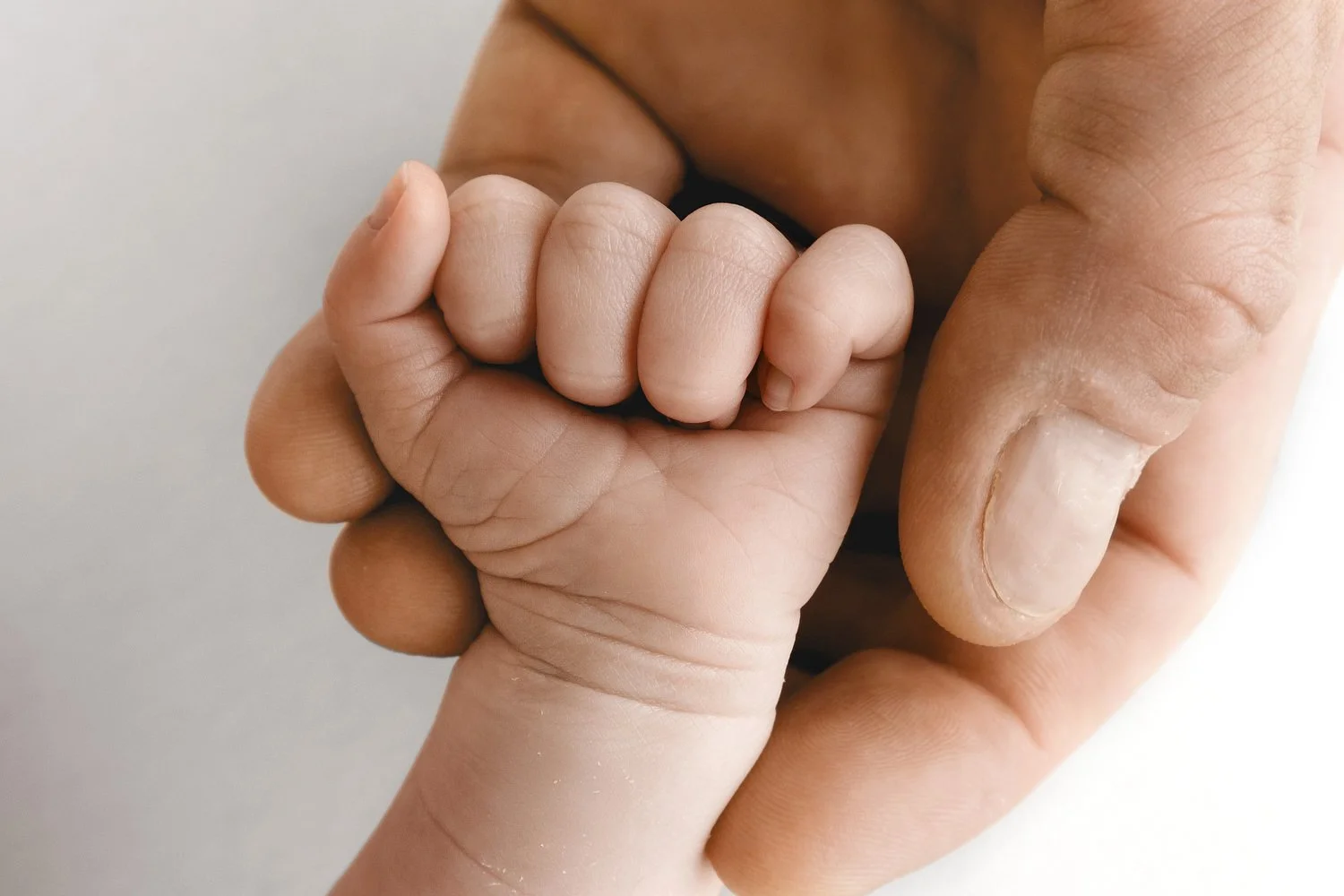
And this is perhaps the most powerful detail shot of all. A newborn fist held inside a parent's hand. The scale alone tells the whole story of those first days. The baby is tiny. The parent is there. The love between them is visible without either of their faces being in the frame.
This image sells because it has context, connection and contrast all at once. It is a detail shot but it is also a family portrait. Parents look at it and see themselves and their baby at the same time. That combination is almost impossible to resist.
Shoot for Your Clients, Not for Other Photographers
The framework I have come to after years of Reveal Sessions is this.
Detail shots that show enough of the baby to be clearly recognisable sell consistently and should be a priority in every session. Detail shots that are more abstract, the single toe, the isolated ear, earn their place in larger collections and multi image frames but need to be backed up by wider versions that give parents the recognisability they need. And occasionally a detail shot will sell for a deeply personal reason you could never have predicted, which is why you should always include them and never assume you know what will or will not resonate with a particular family.
Shoot for your clients, not for the approval of other photographers. The two are not always the same thing and knowing the difference is one of the most valuable things you can learn.
If you would like to learn more about how I approach newborn sessions, from detail shots to posing to building a gallery that sells, you can find out more about my education offerings below.