How to Photograph an Awake Newborn
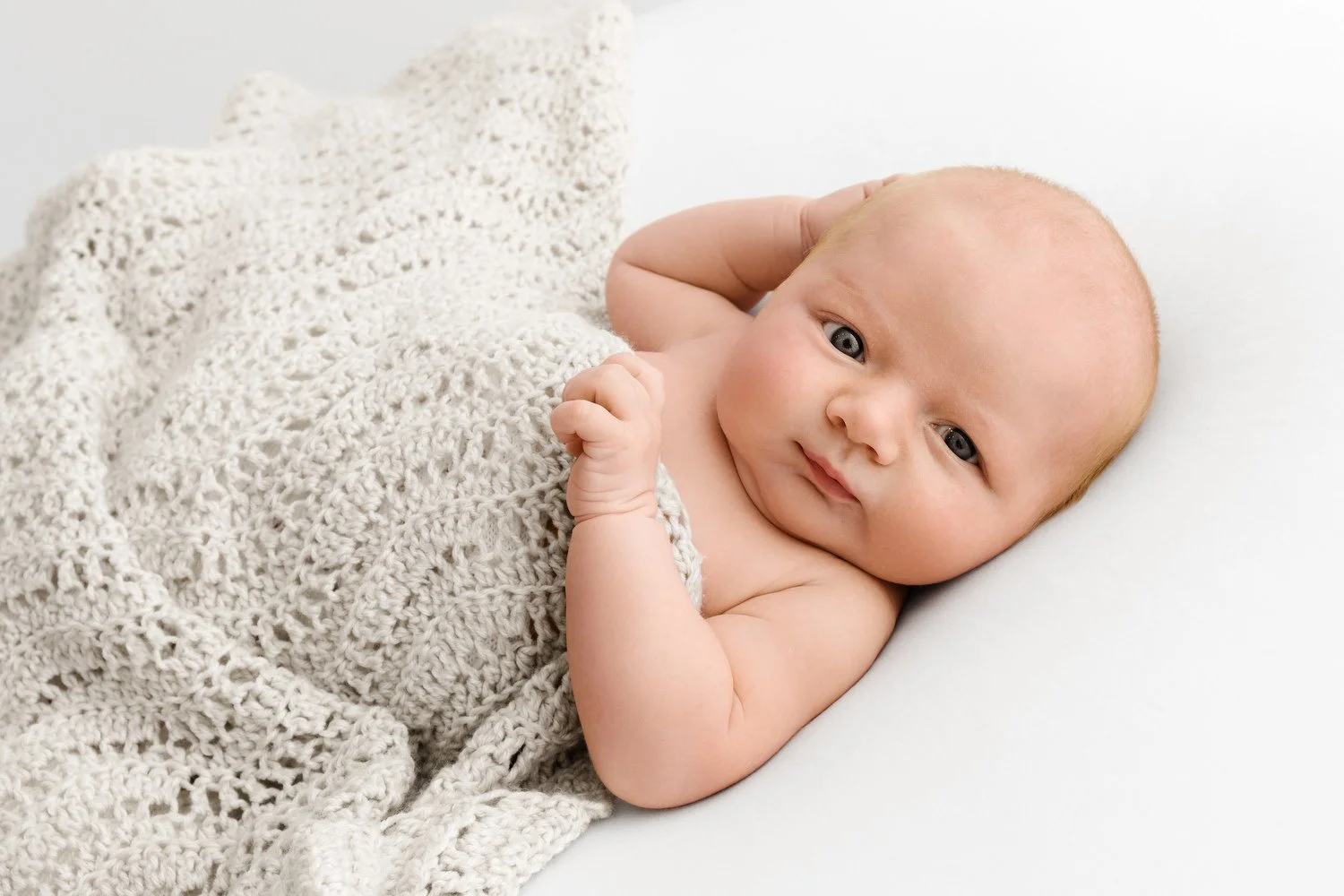
A wide awake newborn is a gift.
Not a problem to solve, not a reason to panic, not a sign that the session is going wrong. A gift. And once you understand that, everything about photographing newborns gets easier and more enjoyable.
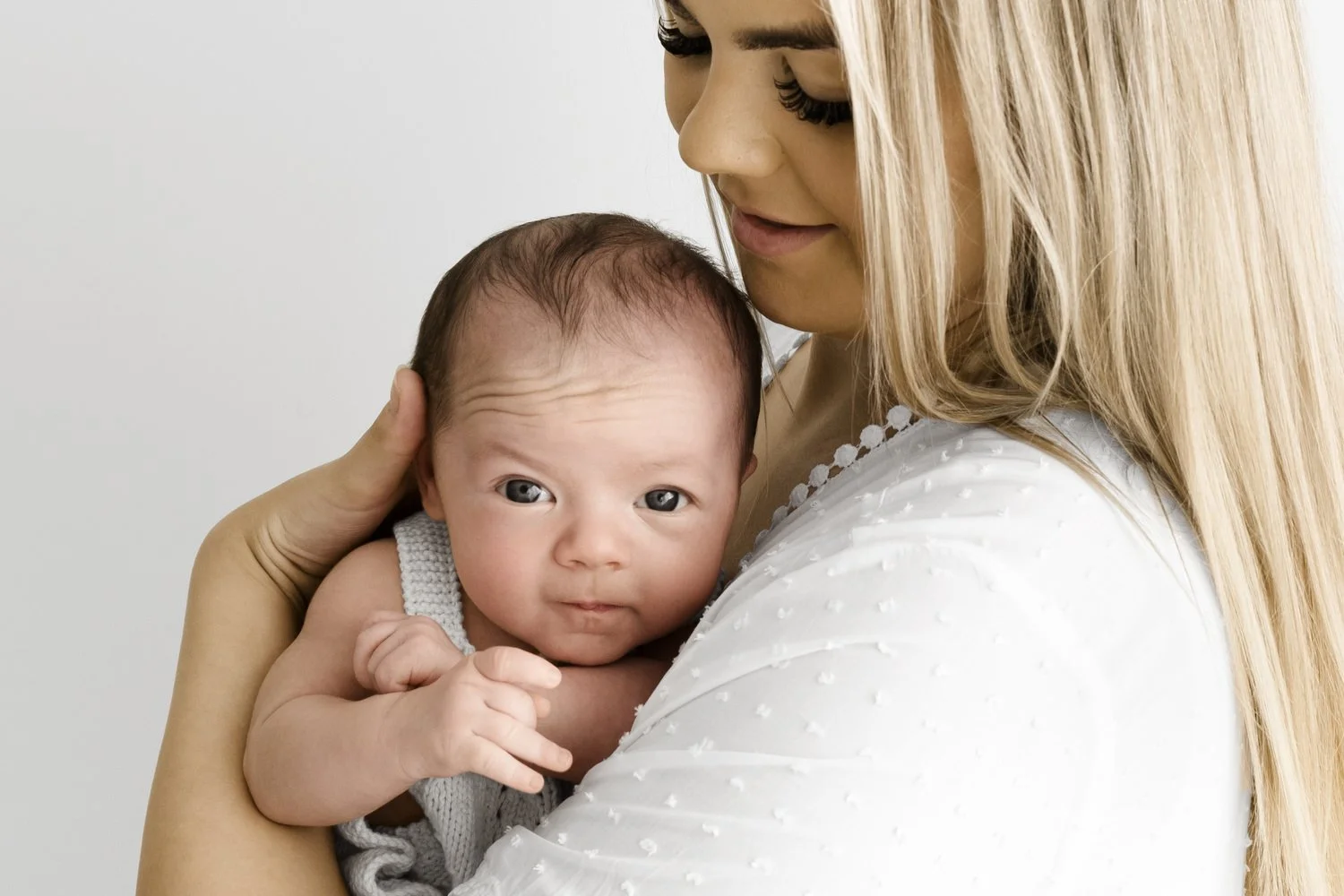
Most photography education focuses almost entirely on sleeping babies. Settling techniques, posing on the beanbag, wrapping, shushing. All of it valuable. But the awake images are often the ones parents choose first at their Reveal Session. Seeing a baby's eyes open adds a completely new dimension to a gallery. Parents love to look into the eyes of this tiny human they have created together. There is something about it that no sleeping image can quite replicate.
Here is how I approach it.
If a Baby Arrives Awake, Get to Work Immediately
Newborns have short awake windows and they are too precious to waste. If a baby arrives at my studio with their eyes open I start working straight away because it might be the only opportunity I get for those open eyed images.
Before I do anything else I explain to the parents why I am getting started quickly rather than stopping to chat. They always understand and appreciate the honesty. The relaxed conversation can happen while I am working.
The baby does need to be settled comfortably onto the beanbag first but that process should be calm and swift. Everything should already be set up and ready to go before the family arrives. The Mabel & Møøse Method uses exactly the same setup whether a baby is awake or asleep, so there is no adjusting or rearranging needed. You simply begin.
I turn off all white noise and shushers as soon as I want to keep a baby awake. I use them only briefly to help settle the baby onto the beanbag and then switch them off. The quiet actually helps keep a baby alert and engaged.
Get Close and Attract Their Attention
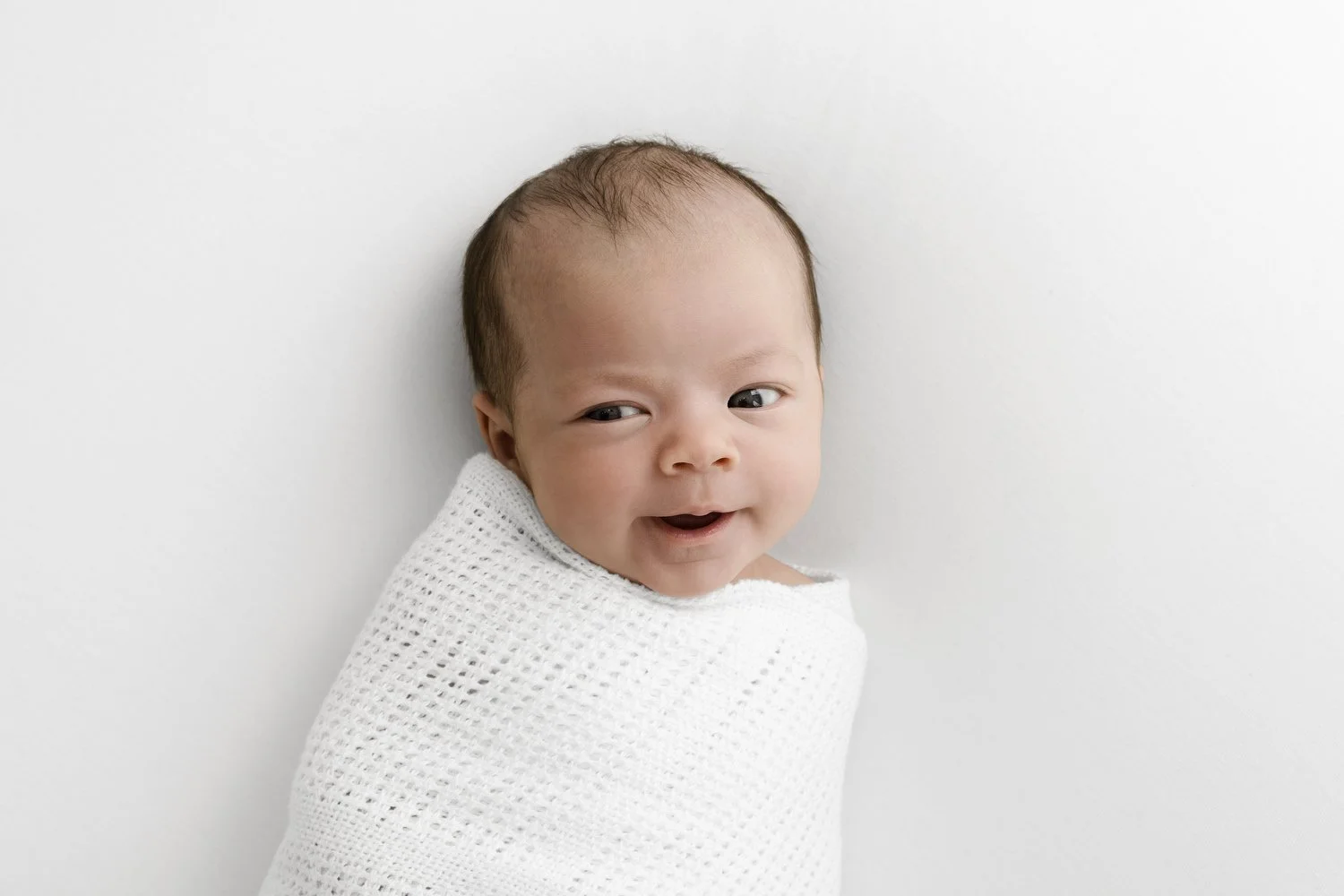
This is something most photographers do not know and it makes a significant difference. Newborns only see in blurry black and white for the first four weeks of life. They can barely focus and can only see clearly at around 12 to 14 inches, roughly 30 to 35 centimetres. If you are shooting from further away than that the baby simply cannot see you and will not look towards your camera.
Get close to the baby's face. Then attract their attention with sound. A soft jingle bell often works well but keep it gentle so as not to startle them. I often find that a small clucking sound with my own voice is enough to make a baby turn their head to find where the sound is coming from. Work calmly but quickly. You do not have long.
Try Different Positions
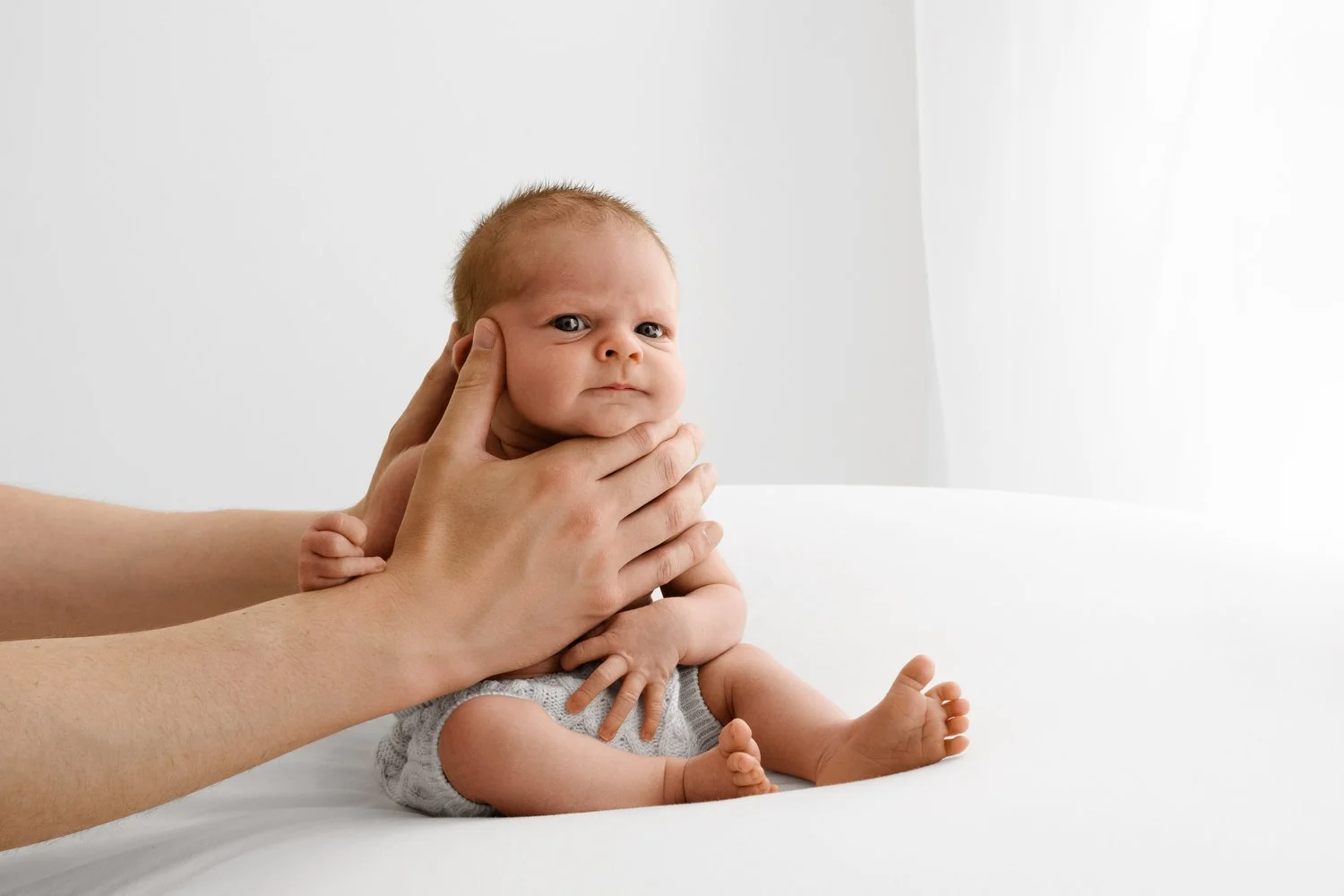
Newborns tend to open their eyes a little wider when they are held in a sitting position rather than lying flat. If you are struggling to get good eye contact try holding the baby upright and see if that makes a difference.
If the baby is lying on their back with your camera directly overhead you give yourself the best chance of getting them to look straight into your lens. Lying the baby on their side is a different approach entirely. They will not look at the camera, so you need to follow their gaze and work with wherever they are looking rather than trying to direct them.
Build Variety Into Your Awake Shots
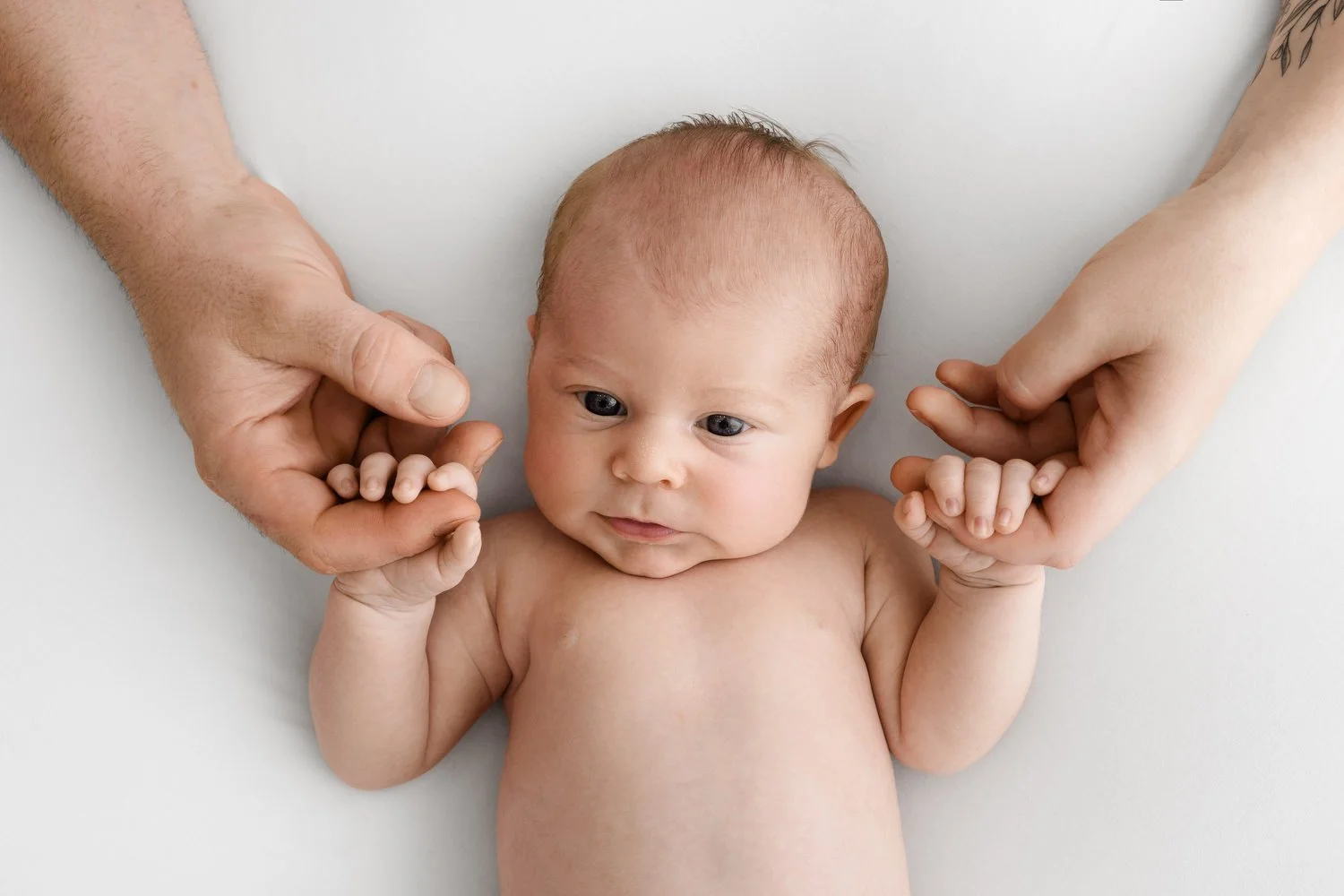
Do not spend all your time trying to get one perfect eye contact image. Mix up the variety of shots you are taking. I aim for a close up of the baby's face, a full body image, a profile shot and then I begin introducing mum and dad. I have built up a repertoire of poses that work beautifully with an awake baby, including images with mum, dad and siblings, and I have all of that available to me at every single session.
Be Very Careful About When You Introduce Mum
This is one of the most important practical tips I can share about photographing awake newborns and it is something you will only learn by experience if nobody tells you first.
Bringing mum over will almost always make a sleepy baby more alert. Babies can sense their mother's milk and the proximity of mum is genuinely stimulating for a newborn. Used at the right moment this is incredibly useful.
But introduce mum too early and a baby who was calm and content can become unsettled very quickly. And never place a hungry awake baby directly onto mum's chest. They will instinctively bury their head in search of milk and the session will stop while everyone feeds and resettles.
Get as many awake images as you can before you introduce mum. Then bring her in at the right moment and use that alertness to your advantage.
Have a Plan So You Can Stay Calm
The single biggest thing that will improve your awake newborn photography is not a technique. It is your own state of mind. If you feel stressed or pressured the baby and the parents will feel it. An awake newborn session should feel calm, purposeful and enjoyable.
The way I stay calm and on track is by having a clear workflow in front of me. I use my Awake Flow Posing Guide at every single session. It gives me plenty of guidance and inspiration while the baby is awake and then flows naturally into sleeping poses as the baby drifts off, so I get the very best of both worlds without ever having to think about what to do next.
Going Deeper
If you would like to go deeper, my One-to-One Mentoring is built entirely around what you need, whether that's newborns, older babies, or everything in between, alongside the session structure and selling skills that turn a beautiful gallery into a profitable business.
If you'd rather start somewhere simpler, The Simple Six Beginners Course is a structured online course you can work through at your own pace.
Start The Simple Six Beginners Course
And the Flow Posing Guides give you ready made session flows so as every session feels relaxed.